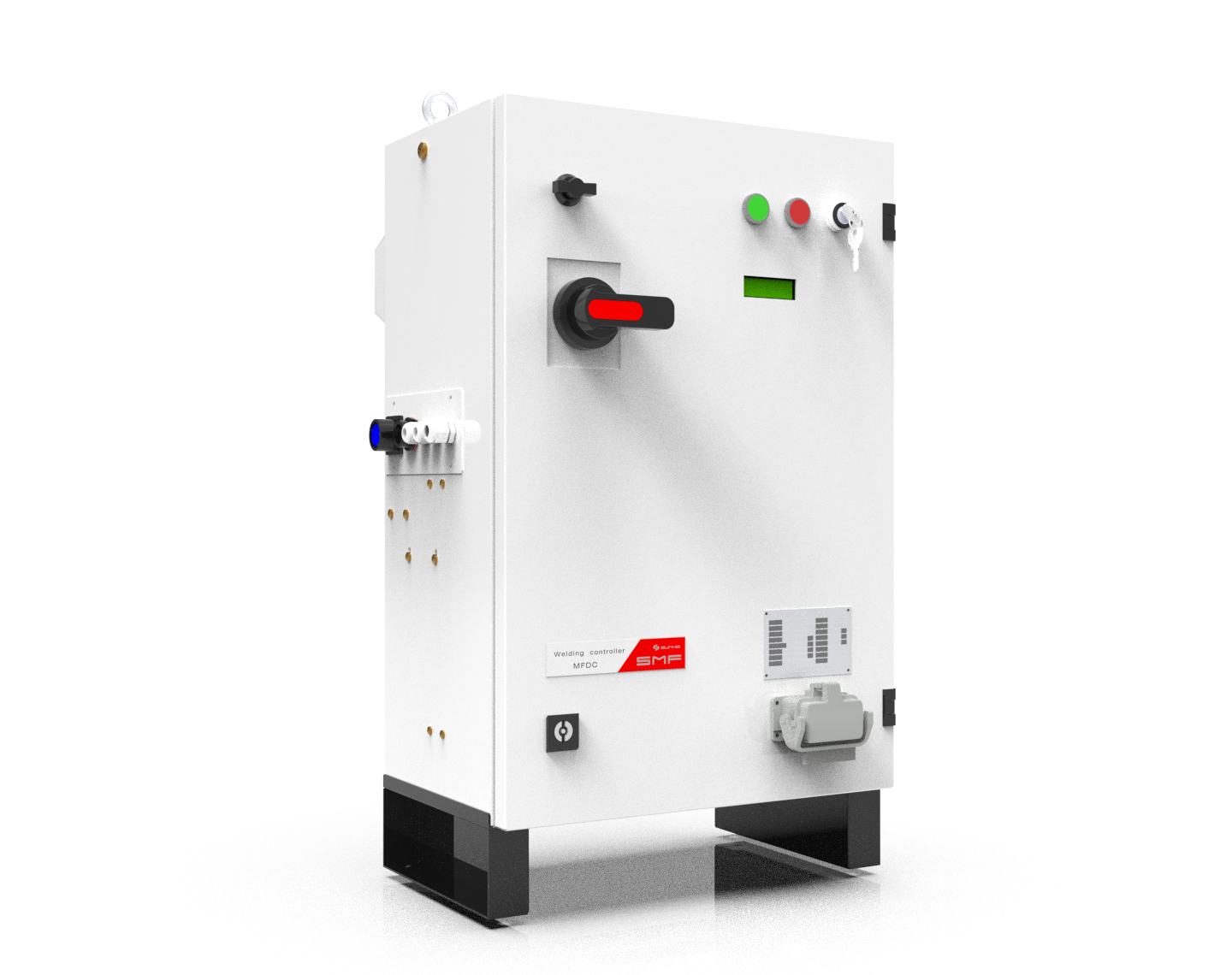
Manufacturing plants constantly face intense pressure to accelerate daily throughput while maintaining absolute joint integrity across complex multi-layer metal assemblies.
Traditional welding setups frequently struggle with thermal consistency, leading to costly reworks and unexpected production line stoppages. Modern technology solves these persistent engineering hurdles through intelligent power conversion, adaptive closed-loop feedback loops, and high-speed data acquisition.
Understanding these advanced hardware features clarifies why facilities upgrading their floors experience dramatic improvements in weld reliability, joint strength, and overall equipment effectiveness. Detailed evaluation of modern joining technology reveals major operational shifts.
Intelligent Control Architecture and Dynamic Feedback
Engineers rely heavily on sophisticated control architectures that monitor dynamic resistance changes directly at the workpiece interface during every single pulse. By collecting secondary voltage and current variations instantaneously, advanced controllers adjust heating parameters on the fly to prevent defects.
This real-time compensation helps reduce weld expulsion and improve nugget consistency when dealing with minor variations in material thickness, surface coatings, or oxidation.
Digital programmability elevates factory floor automation by storing hundreds of unique weld schedules directly within non-volatile controller memory banks. Operators can switch between different product runs instantly via standard industrial fieldbus or Ethernet interfaces, completely eliminating manual reconfiguration errors during shift changes. Comprehensive data logging tracks every single weld cycle, supplying the meticulous traceability required for stringent automotive and electronics manufacturing compliance.
Communication protocols enable deep, bi-directional integration between the welding power source and robotic handling cells or programmable logic controllers. Synchronized pressure valves and force-feedback mechanisms ensure that mechanical clamping force matches electrical timing down to the microsecond before current initiation. Automated monitoring flags any parameter deviations immediately, preventing defective components from advancing further down the assembly line and safeguarding downstream quality.
Energy Management and Material Adaptability
Precise frequency modulation allows modern power supplies to optimize thermal delivery according to specific metallurgical demands of high-alloy steels, titanium, and aluminum. Medium-frequency inverter configurations transform incoming three-phase AC power into stable direct current, drastically reducing primary line draw while sharpening pulse timing down to microseconds. Such technological refinements ensure that heat generation adheres strictly to fundamental physical laws without creating unmanaged thermal gradients or localized structural warping.
Advanced material compatibility defines another crucial dimension of contemporary joining technology, especially when working with high-conductivity copper alloys or sensitive battery tabs. Specialized resistance welding solutions accommodate diverse material combinations by tuning current waveforms to match specific interfacial resistance profiles. Alternating polarity options successfully neutralize one-sided thermal imbalances, protecting delicate electronic components from localized overheating and premature degradation.
Capacitor discharge hardware targets specialized applications requiring concentrated energy bursts under restricted facility grid capacity conditions. Such configurations deliver rapid multi-point projection welding without placing excessive continuous electrical loads on existing plant infrastructure.
Localized thermal containment protects surrounding heat-affected zones, successfully preserving the structural integrity of thin-gauge sheets, projection nuts, and precision electromechanical subassemblies.
Production Yield and Equipment Longevity
Thermal confinement eliminates the need for filler metals, shielding gases, or hazardous chemical fluxes, keeping the immediate workspace remarkably clean and safe. Sunke designs these robust power platforms to support green manufacturing initiatives by eliminating harmful arc fumes and reducing overall facility ventilation overhead. Minimal part distortion means secondary straightening or finishing operations become entirely obsolete, yielding immediate labor and material savings.
Minimizing electrode degradation remains a major economic objective for high-volume automotive and industrial fabrication facilities operating demanding round-the-clock shifts.
Refined current profiling distributes thermal loads more evenly across copper contact points, extending routine maintenance intervals significantly. Robust transformer engineering guarantees stable multi-shift operation without thermal runaway, core saturation, or sudden electrical performance degradation.
Industrial resistance welding systems incorporate ruggedized enclosures and advanced internal cooling channels designed specifically to withstand harsh factory shop-floor environments.
Equipment stability translates directly into lower maintenance overhead, fewer unscheduled line stoppages, and highly predictable lifecycle costs for plant managers and operations directors. Facility teams gain financial predictability alongside superior metallurgical outcomes across every single production run.
Scalability and Future-Proof Integration
Factory scalability depends heavily on modular hardware design that adapts effortlessly to future automation upgrades and line expansions. Deploying adaptable resistance welding solutions empowers engineering teams to reconfigure production cells rapidly when customer design specifications shift unexpectedly. Standardized communication interfaces simplify hardware integration across multiple global plant locations.
Seamless technical collaboration with them ensures that integration teams receive expert guidance throughout complex parameter validation, tooling selection, and trial stages.
Comprehensive engineering support bridges the gap between raw equipment capabilities and fully optimized plant performance. Selecting proven power architectures ultimately secures long-term competitive advantage in demanding modern manufacturing markets.
Engineering leadership across global automotive and battery sectors continues to prioritize platforms that guarantee uncompromising repeatability. Sunke provides the advanced technological foundation required to achieve these rigorous performance standards without sacrificing production speed or cost-efficiency. Modern resistance welding systems deliver the exact structural reliability modern facilities require to remain competitive.
