Starting batteries face demanding conditions long before a driver turns the ignition key. Cold mornings, repeated engine starts, vibration, and irregular charging can expose weaknesses that remain hidden during a simple voltage check. Manufacturers therefore need several types of quality tests, not just one final inspection.
For buyers sourcing an automotive starting battery, test methods matter as much as advertised specifications. Understanding what each assessment measures helps distributors, vehicle manufacturers, and fleet procurement teams compare products and request useful evidence before placing orders.
Cranking Tests Reveal Starting Capability
Cold cranking amps, or CCA, describe starting-current capability under defined test conditions. A laboratory uses a specified temperature, discharge procedure, and voltage threshold according to the selected standard. Purchasing teams should confirm which standard applies before comparing CCA figures from different suppliers.
The initial voltage reading cannot demonstrate whether a battery can deliver sufficient current during engine cranking. Load testing examines voltage behavior while current is drawn. Engineers also inspect the voltage recovery pattern after discharge to understand how the battery responds to demanding starts.
For a sodium ion batteries manufacturer, repeated starting tests add another layer. Testers apply controlled starting pulses with defined rest periods. They track voltage drop and temperature across cycles. These results help buyers assess batteries intended for taxis, delivery vans, or frequent restarts.
What Happens During Temperature Testing?
Battery output changes with temperature. Low-temperature testing examines starting performance after the battery has reached a defined cold condition. Test reports should identify the conditioning period, test temperature, discharge current, and pass criteria rather than presenting a cold-weather claim without context.
High-temperature evaluation investigates behavior during prolonged heat exposure. Engineers may monitor voltage, capacity retention, enclosure condition, and protection-system responses. A published operating-temperature range should not be confused with proof that every performance rating stays unchanged throughout that range.
Thermal cycling provides different information. Alternating cold and hot conditions can reveal problems with seals, connections, and mechanical components. For distributors serving several climates, these tests support product selection and reduce uncertainty about operation.
Durability Depends on More Than Cycle Count
Cycle-life testing repeats defined charge and discharge patterns until a specified endpoint is reached. Depth of discharge, temperature, current, and charging method strongly affect the outcome. Buyers should request the complete test conditions when reviewing claims about service life or start-stop endurance.
Vibration tests address a separate risk. Road movement can stress internal connections, terminals, and the battery case. A test fixture applies controlled vibration, followed by electrical and visual inspection. The selected vibration profile should reflect the intended vehicle application rather than an unrelated laboratory setting.
Charging compatibility deserves attention too. A replacement battery must work with the vehicle’s charging system and electrical requirements. Engineers examine voltage limits, charging response, and protective behavior. Matching case dimensions alone does not establish that a sodium-ion product can replace a conventional lead-acid unit.
Safety Checks and Production Consistency
Safety evaluation can include overcharge, short-circuit, and abnormal-temperature procedures selected for the battery chemistry and application. Results should record protection responses, physical changes, and test conditions. Buyers should distinguish between a test method proposed for qualification and evidence that a particular model has passed it.
Incoming material checks and production inspections complement laboratory qualification. Manufacturers can inspect component dimensions, electrical connections, assembly quality, and identification labels. Batch records also help trace components and investigate unexpected variations discovered during incoming inspection at a customer’s facility.
For bulk orders, consistency is especially important. Sampling plans should state how many units are tested, how they are selected, and which acceptance limits apply. Distributors can then compare shipments against an agreed quality specification instead of relying only on a single demonstration sample.
Product Specifications Need Verifiable Evidence
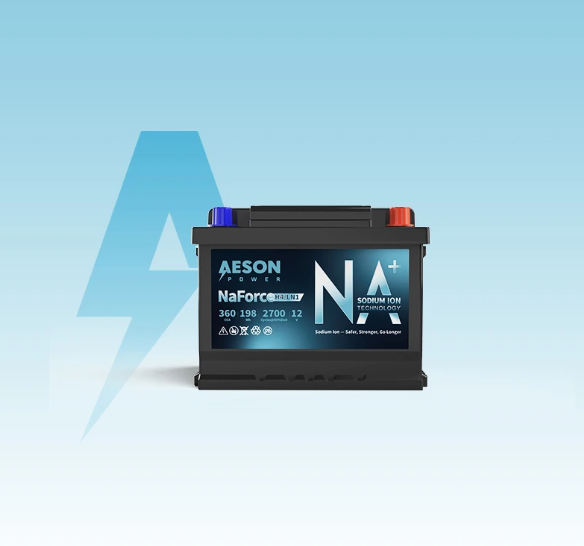
The H4/LN1 sodium-ion model listed by Aeson Power provides a useful example of specification review. Its published values are 12V, 360A CCA, and 198Wh. The listed weight is 3.5kg, with dimensions of 207 × 175 × 190mm. These figures establish a reference for product comparison, but do not replace independent application testing.
A buyer reviewing an automotive starting battery should request supporting test reports for its cranking output and temperature behavior. The report should identify the tested model, sample quantity, method, and measured results. Installation checks should also cover terminal layout, case fit, and electrical compatibility.
When assessing a sodium ion batteries manufacturer, procurement teams can ask whether test records are linked to production batches. Clear documentation helps connect design specifications, sample approval, and delivered units. It also supports technical discussions when customers report performance differences in service.
A Practical Checklist Before Procurement
Test documentation works better when purchasers define requirements early. Vehicle voltage, required cranking current, ambient temperature, duty cycle, and available installation space should form part of the inquiry. The supplier can then identify suitable products and explain which evaluations are relevant.
Quality agreements should specify inspection criteria, sample approval procedures, traceability, and handling of nonconforming units. A sodium ion batteries manufacturer should also clarify which test reports are available for the requested model and whether additional application validation is needed.
Aeson Power is an Australian battery company offering sodium-ion solutions for vehicle starting and related applications. They can discuss product specifications and sourcing requirements with commercial customers seeking to assess sodium-ion technology for their markets.
For the next automotive starting battery project, request model-specific test evidence and confirm vehicle compatibility before approving a bulk order.
