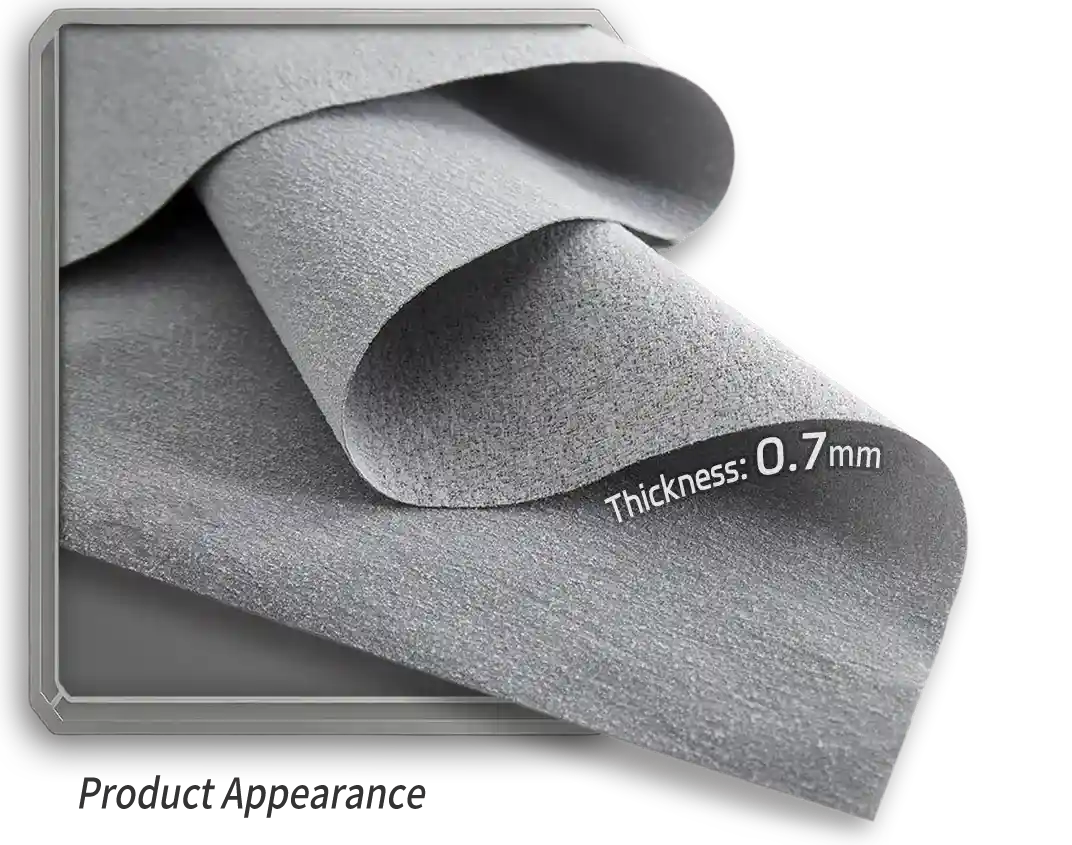
Lightweight thermal insulation is becoming increasingly important in apparel, footwear, outdoor equipment, automotive interiors, and other applications where designers need warmth without excessive thickness or weight. However, thermal insulation alone does not determine whether a product is comfortable or practical. Breathability and moisture management can be equally important, particularly when insulation is used close to the body or in products exposed to changing environmental conditions.
The challenge is to balance thermal resistance with the ability to manage moisture. An insulation material that provides effective heat retention but restricts moisture vapor movement can affect comfort during prolonged use. This is why material structure and moisture-vapor behavior deserve careful consideration when selecting insulation for lightweight thermal applications.
Why Does Breathability Matter in Thermal Insulation Materials?
Breathability helps manage moisture vapor generated during use, which can influence comfort and drying performance. In clothing, for example, the body continuously produces moisture. If that moisture becomes trapped inside the insulation system, the garment may feel damp and take longer to dry.
Traditional insulation approaches vary considerably in how they handle moisture. Fibrous fills, foams, and other porous materials each have different structures and moisture behaviors. Therefore, thermal performance should not be evaluated independently from moisture management.
For product developers, the key consideration is often the overall system rather than a single material characteristic. Thermal conductivity, thickness, flexibility, moisture-vapor permeability, drying behavior, and the construction method can all affect the final product.
How Can Lightweight Insulation Balance Warmth and Moisture Management?
Material structure plays an important role in achieving this balance. Conventional insulation often depends on thickness, loft, or trapped air to slow heat transfer. Advanced insulation technologies can instead use engineered microstructures to achieve thermal performance within a thinner profile.
Y-Warm uses a flexible nanoporous, closed-cell structure designed to provide thermal insulation while maintaining flexibility. Its official technical information describes cell-wall thickness of approximately 20–280 nanometers, pore sizes of approximately 30–190 micrometers, a closed-cell ratio above 95%, and porosity above 96%.
For applications where space and weight are limited, such a structure can offer an alternative approach to conventional bulky insulation. The material is also designed to function as an interlayer, allowing manufacturers to integrate it between an outer material and lining in apparel or combine it with other materials in non-apparel applications.
Moisture-Vapor Permeability Is a Design Consideration
Y-Warm’s moisture-management approach is based on hydrophilic functional groups. According to the company, moisture generated by the body can be absorbed from the inner surface, transported through the material, and released from the outer surface. This allows moisture-vapor management to be incorporated alongside thermal insulation rather than treating the two requirements as completely separate functions.
The company reports rapid moisture evaporation under specified test conditions. The reported performance should be interpreted according to the relevant test method and reference material. Its website says absorbed moisture can dry completely in approximately one hour after wetting under room-temperature test conditions. These figures should be understood within their specific test conditions rather than treated as universal performance values for every finished product.
What Should Manufacturers Consider When Selecting Breathable Insulation?
The appropriate insulation material depends on the application and the construction of the finished product. Manufacturers should consider several factors before making a material decision.
First, evaluate the required thermal performance. A thinner material can be advantageous where product dimensions, weight, or flexibility are restricted, but the required insulation level still needs to be verified through appropriate testing.
Second, consider moisture behavior. Water-vapor transmission and drying characteristics can be particularly relevant for apparel, footwear, outdoor products, and other applications involving prolonged human use.
Third, examine the manufacturing process. The way an insulation layer is stitched, quilted, laminated, or combined with other materials can affect its final properties. Y-Warm specifically cautions that dense quilting can increase stiffness, while full-coverage adhesive lamination can eliminate moisture-vapor permeability. The company also warns that pressure at temperatures above 100°C may affect pore recovery and thermal-insulation performance.
Finally, verify performance through product-level testing. Y-Warm provides testing and technical resources covering areas including thermal conductivity, moisture resistance, water-vapor transmission, safety, flexibility, strength, and other performance characteristics.
Why Consider Y-Warm for Lightweight Thermal Applications?
For manufacturers developing products where thermal insulation, flexibility, thickness, and moisture management need to work together, Y-Warm offers a different material approach from conventional bulky insulation. Its flagship material is listed at 0.7 mm thickness, and the company states that it can provide approximately 10°C of temperature improvement under specified test conditions. Its stated operating temperature range is −50°C to 150°C.
Y-Warm focuses on advanced metamaterials and the industrialization of its proprietary Y-Warm technology. Their material portfolio includes grades designed for different requirements, including enhanced softness, enhanced thermal insulation, localized softness, enhanced strength, and a flame-retardant grade for automotive interior applications.
For manufacturers planning to buy insulation wholesale, evaluating the material’s technical data, intended application, processing method, and moisture-management requirements can help determine whether it fits the finished product. To explore lightweight thermal insulation solutions and discuss application requirements, contact Y-Warm Technologies for further product information and technical support.
