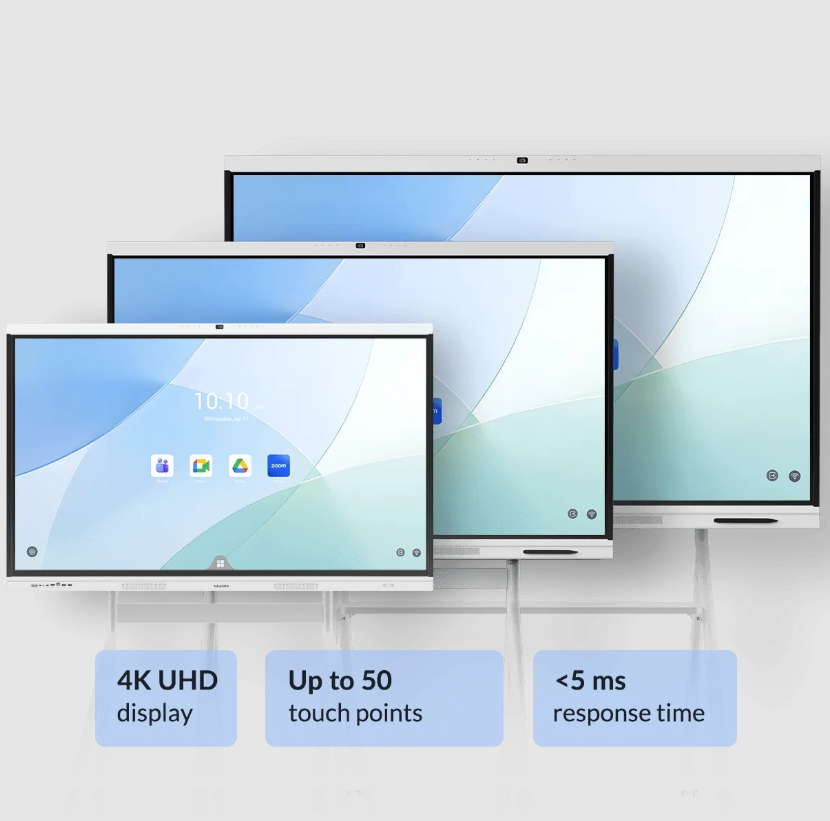
Business meeting rooms require more than a display and a table. Video conferences may involve remote colleagues, clients, suppliers, and internal teams. Each meeting also depends on compatible equipment, clear communication, and reliable room operation. When companies plan a new meeting space, the purchase price is only one part of the investment. Installation, maintenance, staff time, and future upgrades also affect the overall cost.
Why Initial Purchase Price Is Only One Part of the Budget
A lower equipment price does not automatically mean a lower project cost. Businesses should consider the complete setup required for their meeting rooms. Separate displays, cameras, microphones, connection devices, and control accessories may increase the number of items that procurement teams need to source and manage.
Installation also affects the budget. Multiple devices may require additional cables, mounting work, configuration, and compatibility checks. If equipment comes from different suppliers, the installation team may need more time to coordinate connections and resolve technical issues. These costs should be considered before approving a purchase.
For companies comparing the NewBoard P series for business, the relevant question is how the equipment fits the intended meeting environment. Procurement teams can compare the initial quotation with the complete cost of an equivalent setup. This makes the comparison more practical than evaluating display prices alone.
How Equipment Consolidation Changes Room Planning
An all-in-one smart meeting board for professional video conferencing combines key meeting functions in one integrated unit. This approach can reduce the need to source separate devices for basic conferencing tasks. It may also simplify equipment placement and make the room easier for employees to use.
Room layout is another consideration. Separate cameras and displays require suitable mounting positions and viewing angles. An integrated system can reduce the number of devices placed around the screen area. This may help keep meeting tables less cluttered and leave more flexibility for furniture arrangement, although the actual space savings depend on the room design.
Consolidation can also simplify procurement records. Instead of managing several individual product specifications, buyers can review the integrated unit alongside any additional equipment required for their use case. They should still confirm connectivity, network access, installation requirements, and compatibility with their existing conferencing software before making a decision.
Camera Performance and Everyday Meeting Quality
Video quality influences how clearly remote participants can follow discussions. A camera with insufficient resolution may make facial expressions, gestures, and details harder to see. Camera placement also matters, particularly in rooms where participants sit across a long table or move between different seating positions.
The Nework product information describes a 48MP 4K conferencing camera with intelligent 3A functions: auto exposure, focus, and white balance. These functions help the camera adjust to changing lighting and focus conditions. For business users, they are relevant when meetings take place at different times of day or under varied indoor lighting.
The camera also has a 108° ultra-wide field of view, with accurate color and ultra-low distortion as stated in the product specifications. This viewing angle can help include participants seated across a wider area. Buyers should assess the camera in relation to room width, seating distance, lighting, and the number of people expected to attend each meeting.
Calculating Return on Investment Over Time
Meeting-room return on investment should reflect both direct expenses and operational changes. Direct expenses include equipment, installation, accessories, and future replacement costs. Operational factors include the time employees spend preparing meetings, resolving connection problems, and requesting technical support.
Businesses can estimate the potential value by recording current setup times and the frequency of equipment-related interruptions. For example, if employees regularly spend several minutes connecting separate devices before a call, an integrated setup may reduce some of that preparation. The financial effect depends on meeting frequency, staff costs, and the actual improvement achieved.
A useful calculation compares the total cost of ownership over a chosen period with measurable savings and operational benefits. Buyers should avoid assuming that every minute saved becomes a direct cash saving. Instead, they can estimate the value of recovered working time and compare it with the initial investment, ongoing costs, and expected service life.
What Procurement Teams Should Verify Before Buying
Before selecting a meeting board, procurement teams should define the rooms where it will be used. A small huddle room has different requirements from a large conference room. Room dimensions, participant numbers, conferencing habits, network conditions, and existing workplace technology all influence the final specification.
They should also review the full quotation. Ask whether mounting accessories, installation, staff training, software compatibility checks, and after-sales support are included or priced separately. Confirm warranty terms, maintenance arrangements, and the process for handling faults. These details help buyers compare suppliers on a consistent basis.
Companies assessing Nework can use the same process to determine whether the proposed equipment matches their meeting requirements. The product’s camera specifications provide useful points for technical evaluation, but buyers should also request demonstrations or practical testing where possible. This helps teams judge image framing, daily usability, and compatibility in their own working conditions.
Making the Investment Fit Business Needs
A meeting-room upgrade makes financial sense when its configuration addresses actual workplace needs. Equipment consolidation may reduce installation complexity, while suitable camera performance can support clearer communication between in-room and remote participants. However, the final value depends on room conditions, employee adoption, and the complete cost of ownership.
For businesses evaluating the NewBoard P series for business, a structured comparison of equipment, installation, operating costs, and expected productivity benefits offers a more useful basis for purchasing decisions. With these factors reviewed together, procurement teams can assess whether the investment fits their budget and supports the way their employees collaborate.
