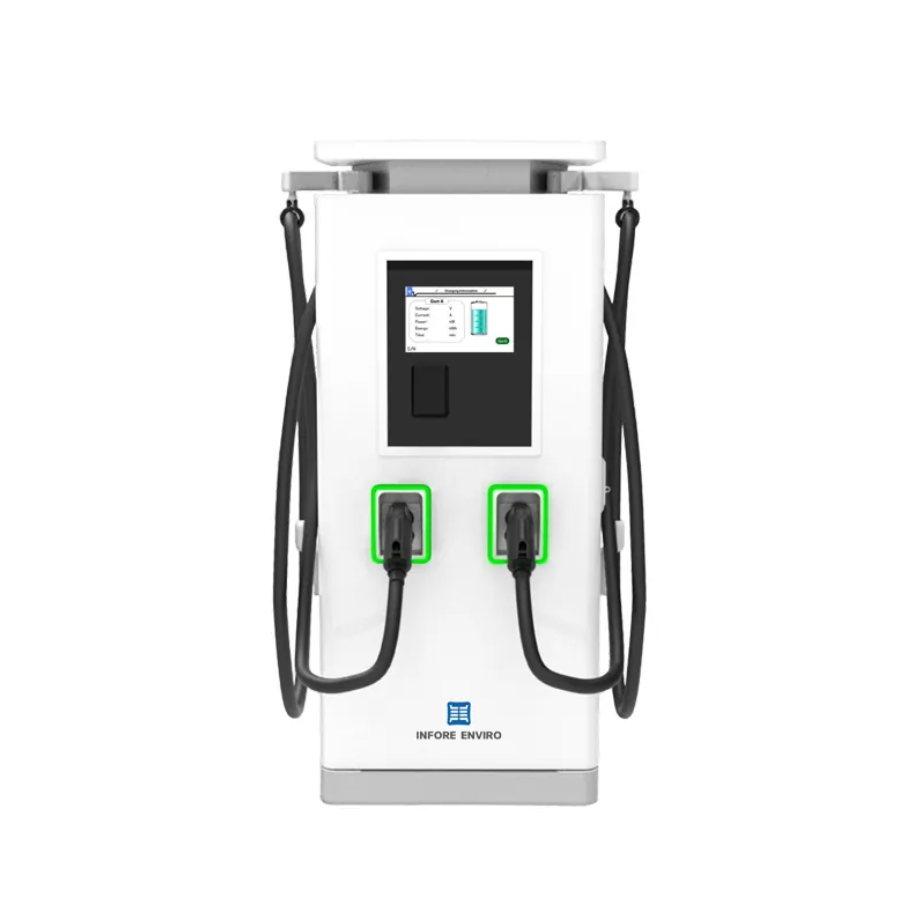
Bulk EV charger procurement involves more than comparing unit prices. Buyers need to review charging power, certification, communication protocols, production capacity, delivery schedules, and after-sales arrangements. A suitable supplier should match the technical and commercial needs of the project while reducing uncertainty during later installation and operation.
For buyers sourcing from a China EV charger manufacturer, the evaluation process should begin with the actual charging scenario. Residential projects, commercial parking areas, fleet depots, and public charging sites may require different power levels and connector standards. Clear project requirements make quotation comparison more practical.
Start with Charging Power and Application Requirements
Charging power is one of the first technical points to review. AC chargers are commonly used where vehicles stay parked for longer periods, while higher-power DC equipment is more suitable for sites that require shorter charging time. Buyers should match charger power with vehicle use patterns, available electrical capacity, and expected daily charging demand.
The supplier’s product range also affects procurement flexibility. INFORE ENVIRO offers charging equipment across 7kW, 11kW, 22kW, 44kW, 30kW, 40kW, 60kW, 120kW, 160kW, 180kW, 240kW, 360kW, and 480kW power levels. This gives buyers more room to match power levels with project needs.
Power selection should still be based on site conditions rather than the largest available rating. Grid capacity, parking duration, vehicle compatibility, and expansion plans influence the configuration. Procurement teams should ask suppliers to explain which power level fits the planned application and why.
Check Certification and Market Compatibility
Certification requirements can vary by market. Products intended for China may need to follow GB/T requirements and 3C certification, while projects in Europe often focus on Type 2, CCS2, CE, CB, and RoHS compliance. Buyers should confirm the required standards before requesting final quotations.
This review is especially important in bulk purchasing because one order may cover many units. A mismatch in connector type or certification can affect installation schedules and market acceptance. Technical documents should be checked before purchase orders are confirmed.
Compliance should not be treated as a simple logo check. Buyers can request relevant certificates, product specifications, and connector information, then compare them with local project requirements. This step is useful for distributors and project buyers working across different markets.
Review Communication and Platform Integration
Charging hardware is only one part of daily operation. Many commercial projects also need remote status monitoring, user management, charging records, or connection with an existing management platform. Standard communication support can reduce integration work when chargers are deployed across multiple sites.
The management platform supported by the supplier can work with the standard OCPP protocol. This matters for B2B buyers because OCPP compatibility may make it easier to connect charging hardware with third-party back-end systems, depending on the project design and software setup.
Before ordering, buyers should confirm the OCPP version, required communication method, and interface needs with the supplier. They should also ask whether additional development is needed. These questions help avoid incorrect assumptions about platform compatibility.
Evaluate Production, Delivery, and Custom Development
Bulk procurement often depends on factory capacity as much as product specifications. Production control, testing, and delivery planning can influence scheduled project deployment. Buyers should review these factors before placing a large-volume order.
INFORE ENVIRO has a factory area of about 12,000 square meters and supports self-developed production and customized development. Its stated delivery cycle is 30 to 45 days. These details help procurement teams plan installation milestones and shipping arrangements.
A supplier with around ten years of industry experience may also have more familiarity with recurring procurement issues, but experience should still be assessed together with technical capability and project support. Buyers can ask how custom requirements and production changes are reviewed.
Examine Protection, Warranty, and Service Terms
Outdoor and semi-outdoor charging equipment is exposed to dust, moisture, and changing weather conditions. Product protection therefore needs to be considered during supplier screening. The chargers covered in this project information include waterproof and dustproof design features, which are relevant for commercial parking areas and other exposed installation environments.
Warranty terms are another practical part of EV charger wholesale evaluation. A two-year warranty provides buyers with a defined service period, while 7×24-hour after-sales response can support communication when technical issues occur. Procurement teams should still clarify warranty scope and replacement-part handling.
Service capability should be reviewed before shipment, not after problems appear. Clear contact channels and service procedures can reduce confusion during later operation. These factors are particularly important for distributors and project operators managing chargers across several locations.
Build a Supplier Comparison Around Project Risk
Choosing a bulk charger partner should be based on technical fit, compliance, production planning, integration needs, and service terms rather than price alone. A structured comparison helps buyers identify where each supplier fits the project and where additional clarification is still required.
When comparing a China EV charger manufacturer, buyers can create a checklist covering power range, certification, connector type, OCPP support, protection design, delivery time, customization, warranty, and after-sales response. This makes supplier discussions more specific and reduces gaps between procurement expectations and actual product capability.
Bulk charger sourcing works better when the buyer defines the project first and evaluates suppliers against those requirements. With clear technical criteria and documented commercial terms, procurement teams can make more practical decisions and prepare more smoothly for installation, commissioning, and later operation.
