Warehouse management involves more than recording goods when they enter or leave a facility. Staff must locate pallets, track assets between storage areas, monitor equipment movement, and maintain accurate inventory records. These tasks become harder when warehouses cover large areas or handle frequent transfers. Radio frequency identification (RFID) can help businesses collect identification data without relying on manual barcode scans at every checkpoint.
The value of an RFID system depends on the type of goods, the layout of the facility, and the distance between tags and readers. Active systems are worth considering when assets move across wide spaces or require identification from a greater distance. Understanding their practical uses helps warehouse operators decide where this technology fits into their existing workflows.
Tracking Pallets Across Large Storage Areas
Pallets often move between receiving docks, temporary holding zones, storage racks, and dispatch areas. When workers record each transfer manually, missed scans can create gaps in inventory records. RFID identification offers another way to capture pallet movements at suitable monitoring points.
Active RFID tags contain a power source that supports signal transmission. This differs from passive tags, which rely on energy from a reader to respond. The active design can support identification over greater distances, depending on the tag, reader, environment, and system configuration.
Warehouse operators can attach suitable tags to reusable pallets and configure readers around key movement routes. The collected data can help staff identify pallet locations and review movement histories. Physical placement still matters because metal structures, stored goods, and the warehouse layout can affect radio performance.
Improving Visibility at Receiving and Dispatch
Receiving and dispatch areas often experience concentrated movement during busy periods. Workers need to confirm incoming goods, stage outgoing orders, and identify pallets awaiting inspection. Repeated manual checks can add work when several vehicles arrive within a short period.
Long range active RFID tags can support identification at selected checkpoints when compatible readers are installed. Instead of requiring staff to scan every tagged item individually, a configured system may detect tagged assets as they pass through monitored areas. The actual results depend on read-zone design and the handling process.
Businesses should test the system using real pallet loads and normal traffic patterns. Testing can reveal whether nearby storage zones create unwanted reads or whether reader placement leaves gaps. These findings help technical teams adjust the installation before expanding it across the facility.
Locating Tools and Reusable Equipment
Warehouse operations depend on more than inventory. Handheld equipment, maintenance tools, lifting accessories, and reusable containers may move between teams throughout the day. When these assets lack clear location records, employees can spend time searching for them or arranging replacements.
An active identification system can associate each tagged asset with a unique record. Readers placed at selected entrances or work zones can help establish where an item was last detected. This approach is useful when equipment circulates through a large site and individual scans are difficult to maintain.
However, identification data does not automatically provide continuous indoor positioning. A detection event shows that a tag was read within a configured area. Businesses should distinguish checkpoint-based tracking from systems designed to calculate more precise locations, especially when setting expectations for staff.
Managing Outdoor Storage and Yard Transfers
Some warehouses use outdoor yards for pallet staging, container handling, or temporary asset storage. Rain, dust, and temperature changes can complicate the use of identification devices in these areas. Equipment selection should account for the conditions where tags will operate.
For outdoor applications, active RFID tags with suitable environmental protection can help businesses identify pallets and other tagged assets. An IP rating is particularly relevant when equipment may encounter water or dust. Buyers should also check mounting methods and confirm that the selected tag suits the asset’s surface.
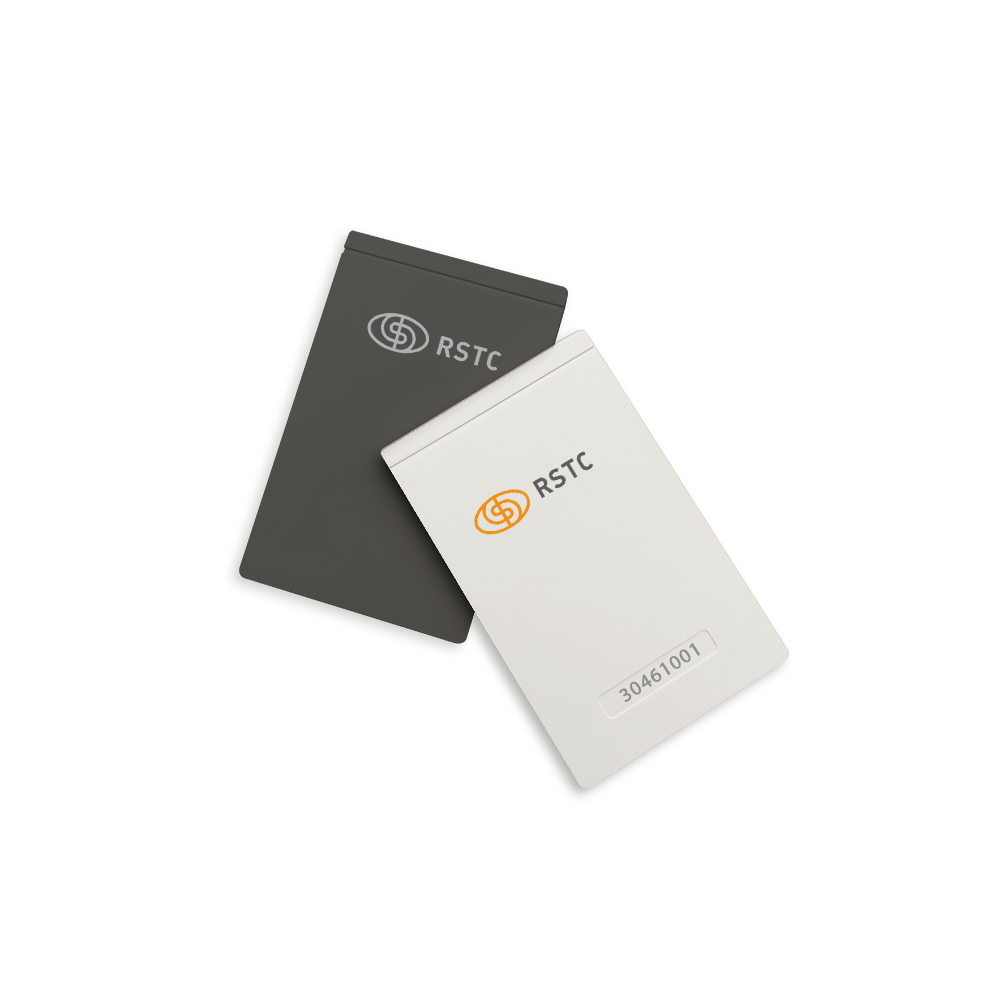
RSTC offers the RS-AT04 Rugged 2.45GHz Active RFID Card for applications such as pallet tracking, boat management, asset tracking, and tooling identification. Its IP67 waterproof design supports use in demanding environments, while its operating frequency falls within the 2.4–2.48 GHz ISM band.
Choosing a Suitable Read Range
Read distance is an important factor when designing a warehouse identification system. Shorter distances may suit controlled workstations, while wider coverage can be useful around yard entrances, loading zones, and open storage areas. Selecting equipment based on distance alone, however, can lead to poor results.
The RS-AT04 supports an adjustable reading distance of up to approximately 120 meters in an open environment, with actual performance depending on the reader, tag settings, antenna configuration, and deployment conditions. This figure provides a reference for planning, rather than a guarantee of the same performance in every warehouse. Building materials, tag orientation, interference, and reader configuration can influence actual detection.
When evaluating long range active RFID tags, warehouse teams should run tests at representative distances and with typical loads. They should also check for overlapping read zones and unwanted detections from neighboring areas. These checks help determine whether the proposed layout supports the intended workflow.
Planning Battery Life and Maintenance
Battery performance affects maintenance schedules and the reliability of long-term asset tracking. If tags stop transmitting unexpectedly, the system may lose visibility of the associated assets. Warehouse managers should therefore consider battery status alongside identification range and environmental protection.
The RS-AT04 features a low-battery alarm and a battery design intended to support low power consumption, high capacity, and a wide operating temperature tolerance. These features can help maintenance teams identify tags that may need attention. Buyers should confirm the expected service interval with the supplier for their intended operating conditions.
RSTC provides an option for businesses assessing active identification in warehouse and outdoor asset-management workflows. Before deployment, procurement and engineering teams should confirm reader compatibility, installation requirements, tag attachment, and integration with existing inventory software. A pilot project can reveal practical issues before the system is expanded. For more guidance on planning read zones, testing RFID performance, and connecting RFID data with warehouse workflows, see RSTC’s RFID warehouse management system deployment guide.
Make the Technology Fit the Workflow
The practical uses of RFID in warehouse management include pallet tracking, receiving and dispatch monitoring, reusable equipment identification, and outdoor asset management. The right setup depends on movement patterns, required read distances, environmental conditions, and the accuracy expected from location records.
Businesses evaluating active RFID tags should begin with a defined operational problem and test the proposed system under real working conditions. With suitable planning, RSTC and its RS-AT04 card can be considered as part of an identification approach for facilities that need wider-area detection and water-resistant hardware.
