Fingerstick sampling may look like a simple clinical task, yet the activation method of the device can shape how naturally the procedure fits into different care environments. Push button safety lancets rely on a defined button action, while pressure-activated designs respond to contact and applied force. The distinction affects hand positioning, user interaction, and the sequence of movements during puncture.
Understanding these differences can help clinical teams assess which mechanism suits routine testing, patient self-monitoring, or other point-of-care applications. SteriLance provides an example of a manufacturer working across several safety-lancet formats, making the comparison useful from both a design and workflow perspective.
Understanding The Two Activation Approaches
Pressure activation generally links puncture initiation to firm contact between the device and the sampling site. Once the intended pressure is reached, the mechanism activates without requiring a separate button to be pressed. Such operation can create a straightforward sequence in settings where contact-based activation is already familiar.
Button activation separates positioning from triggering. The device can first be placed against the fingertip, followed by deliberate pressure on the designated control. That distinction may give users a more explicit sense of when the puncture action begins.
Neither mechanism is automatically suitable for every situation. User familiarity, hand control, sampling frequency, device geometry, and the testing environment all deserve consideration before a particular format is selected.
How Hand Position Changes The Experience
Hand placement becomes especially relevant when the activation control sits on the side or rear of the housing. Finger placement needs to provide enough stability to keep the device aligned while allowing the activation finger to reach the control naturally.
Pressure-based operation can require attention to the contact between the device and skin. Uneven positioning may affect how force is distributed, so users need to follow the manufacturer’s instructions rather than assuming that greater pressure will produce better results.
With push button safety lancets, tactile recognition of the button can simplify the interaction because the activation point is physically distinct from the contact surface. Such separation may be useful during repeated testing, particularly when users need to maintain stable fingertip positioning before activation.
Comfort Depends On More Than Activation
Puncture comfort cannot be attributed to the trigger mechanism alone. Needle gauge, penetration depth, skin characteristics, finger temperature, and individual differences can all influence the experience. Device selection therefore requires a broader view than simply comparing button and pressure activation.
Sampling technique also matters. Excessive force against the fingertip may create discomfort before puncture occurs, while unstable placement can make the procedure feel less controlled. Appropriate preparation and positioning remain important regardless of the activation style.
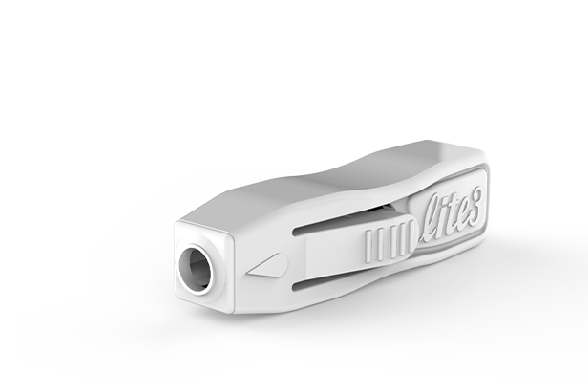
The Disposable Safety Lancet (Lite3 model) uses side-button activation with gentle fingertip pressure and is designed around stable positioning before activation. Its stated design objective includes reducing fingertip pressure during self-testing, with comfort considerations directed toward people who perform routine diabetic monitoring.
Choosing Based On The Testing Environment
Clinical environments often involve trained personnel who become familiar with specific equipment through repeated use. A mechanism that feels intuitive to one team may not provide the same experience for another, making training and standard operating procedures important parts of equipment selection.
Home monitoring presents different considerations. Users may perform testing without clinical assistance, so the relationship between device placement, activation, and puncture should be easy to understand from the instructions. Portability can also matter when testing occurs away from home.
Push button safety lancets may suit workflows where deliberate activation and clear tactile interaction are valued. Pressure-activated models can offer a different operating sequence, particularly where direct contact-based triggering fits the established procedure. The more appropriate choice depends on the specific users and setting.
Looking Beyond The Trigger Mechanism
Procurement decisions should examine the full device specification rather than focusing exclusively on activation. Needle gauge options, puncture depth, packaging, sterility, intended population, disposal instructions, and compatibility with the testing procedure may all affect suitability.
Training requirements deserve similar attention. Even simple devices need correct instruction covering sampling-site preparation, activation, specimen collection, and sharps disposal. Familiarity with the operating sequence can reduce avoidable handling errors.
Workflow evaluation can also include patient feedback. Repeated blood glucose testing may expose differences in comfort and handling that are less obvious during occasional clinical use. Reviewing those practical experiences alongside technical specifications creates a more balanced basis for equipment selection.
Conclusion
Push-button and pressure-activated mechanisms represent two different approaches to controlling the puncture step, with each creating its own interaction between hand position, skin contact, and activation. The more useful comparison is therefore not which mechanism is universally better, but which one aligns with the users, testing frequency, and procedural environment involved.
Push button safety lancets can provide a distinct activation point, while pressure-based systems offer contact-driven operation; both require appropriate technique and adherence to their instructions. Through its range of capillary blood collection devices, SteriLance reflects how different activation concepts can be developed around practical sampling requirements without reducing device selection to a single feature.
Disclaimer: This content is provided for general health education and informational purposes only. It does not constitute medical advice, diagnosis, or treatment. Individual health conditions vary, and no health education article can replace a face-to-face consultation with a qualified healthcare professional or licensed medical institution. If you have specific health concerns or feel unwell, please seek care from a licensed medical facility and do not delay treatment because of content on this platform.
