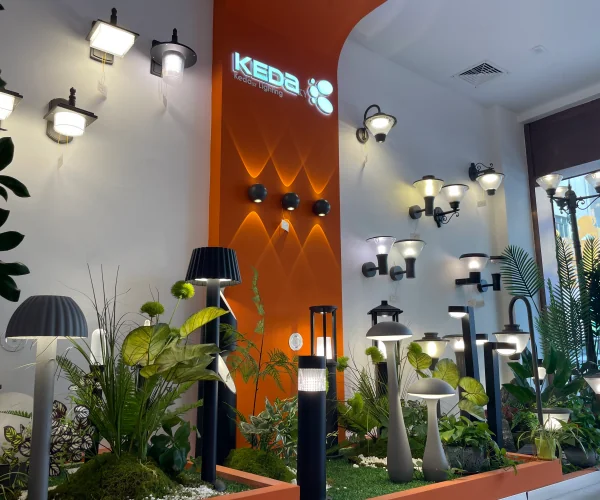
For businesses that buy outdoor lighting in volume — landscape contractors, wholesalers, e-commerce retailers, and property developers — stock accuracy is not a minor operational detail. It affects whether a quote is reliable, whether a project stays on schedule, and whether a customer-facing storefront shows products that are actually available. As B2B purchasing increasingly moves online, more buyers are asking a practical question: how does a supplier keep inventory data accurate across multiple sales channels and internal systems in real time? The answer, for a growing number of manufacturers, lies in API integration.
What API Integration Means for Outdoor Lighting Distribution
An Application Programming Interface (API) is essentially a structured channel that allows two separate software systems to exchange data automatically, without manual entry. In the context of outdoor lighting distribution, this typically connects a supplier’s internal inventory or warehouse management system to external platforms — a distributor’s ERP, a retailer’s e-commerce backend, or a B2B ordering portal.
Instead of updating spreadsheets or waiting on emailed stock reports, an API allows stock levels, order status, and product availability to be pulled or pushed automatically whenever a change occurs. This is particularly useful for outdoor lighting categories affected by seasonal demand. Products such as lawn lamps, wall lamps, column lamps, and spike lamps may be ordered in different quantities across landscaping and commercial projects. Automated inventory visibility can reduce the gap between system data and physical stock.
How Real-Time Inventory Sync Actually Works
Real-time sync generally follows a consistent technical pattern, regardless of the industry:
Data source of truth — The supplier’s warehouse or ERP system maintains the master inventory record, updated as goods move in and out of production and storage.
API endpoints — Defined data points (stock quantity, SKU status, lead time, order confirmation) are made accessible through secure, permission-based API calls.
Webhooks or scheduled polling — Connected systems either receive an automatic push notification when inventory changes (a webhook) or check for updates at set intervals (polling).
Downstream synchronization — The receiving platform, such as a distributor’s procurement dashboard, updates its own records to reflect the current stock position.
For outdoor lighting products in particular, this matters because fixtures often involve variations — different finishes, CCT (color temperature) options, or wattages — and keeping each variant’s stock status accurate prevents buyers from ordering configurations that are temporarily unavailable.
Why It Matters for B2B Buyers
For a business sourcing lighting products at scale, the practical benefits of real-time inventory sync tend to fall into a few categories:
Fewer order errors: Automated data reduces the chance of confirming an order against outdated stock figures.
Faster quoting: Sales and procurement teams can generate accurate lead-time estimates without waiting for manual confirmation from the factory floor.
Better planning for bulk orders: For landscape and commercial projects that require large quantities delivered on a schedule, visibility into current and upcoming stock helps buyers plan installation phases realistically.
Smoother reordering cycles: Recurring B2B customers benefit from systems that can trigger reorder alerts once stock in their own downstream inventory reaches a threshold. None of this replaces the fundamentals of good manufacturing — it simply makes those fundamentals more visible and easier to act on.
What Sits Behind the Data: Production and Quality Systems
Software integration is only as reliable as the operational processes feeding it. A real-time inventory figure is only useful if the underlying production, quality control, and logistics systems are disciplined enough to generate consistent, trustworthy data in the first place.
This is where the manufacturing side of the business becomes relevant. As a custom outdoor lighting manufacturer, Keyida structures its production around a defined workflow — from initial consultation and design planning through to manufacturing, multi-stage quality checks, and delivery. Its 7,000㎡ production facility applies lean manufacturing principles intended to support consistent output at scale, which is the kind of operational groundwork that makes accurate, up-to-date inventory reporting realistic for global B2B partners.
Quality control stages, including incoming material inspection, in-process sampling for waterproof performance and light decay, and pre-shipment calibration, are also part of how a manufacturer maintains data integrity — a product that fails quality checks late in the process affects available stock counts, so catching issues early keeps inventory figures accurate rather than optimistic.
For international buyers, this operational discipline is paired with recognized compliance: Keyida’s products are manufactured to meet CE, RoHS, and SAA standards, which is a relevant consideration for businesses integrating supplier data into regulated markets across Europe, the Middle East, Southeast Asia, and the Americas.
Working With a Reliable Outdoor Lighting Supplier
Businesses evaluating a long-term sourcing partner typically look beyond price and design catalogs to the operational systems that keep orders on track. An outdoor lighting supplier that can support standard MOQs (200 pieces for standard models, 800 pieces for custom colors), maintain a 3-year warranty commitment, and provide OEM and private-label options offers a more predictable foundation for partners who are building their own downstream systems — whether or not those systems are directly API-connected.
About Keyida
Operating under the Keyida name the company has spent 25 years focused specifically on outdoor lighting manufacturing, serving global partners across more than 50 countries. Based in Jiangmen, Guangdong, China, Keyida combines in-house design and prototyping with a dedicated production facility and a multi-stage quality control process, positioning it as a manufacturing partner for distributors, contractors, and brands sourcing outdoor lighting at scale. Businesses evaluating suppliers for data-integrated procurement systems can review Keyida’s product categories and request project-specific details directly through the company’s official channels.
Final Thoughts
Real-time inventory sync through API integration is becoming a standard expectation for B2B buyers who need accurate, timely data to run their own operations smoothly. But the technology itself is only one half of the equation — the other half is a manufacturing and quality control process disciplined enough to make that data worth trusting. For businesses sourcing outdoor lighting internationally, evaluating both the digital infrastructure and the production fundamentals of a potential supplier remains a practical step toward building a dependable, long-term partnership.
