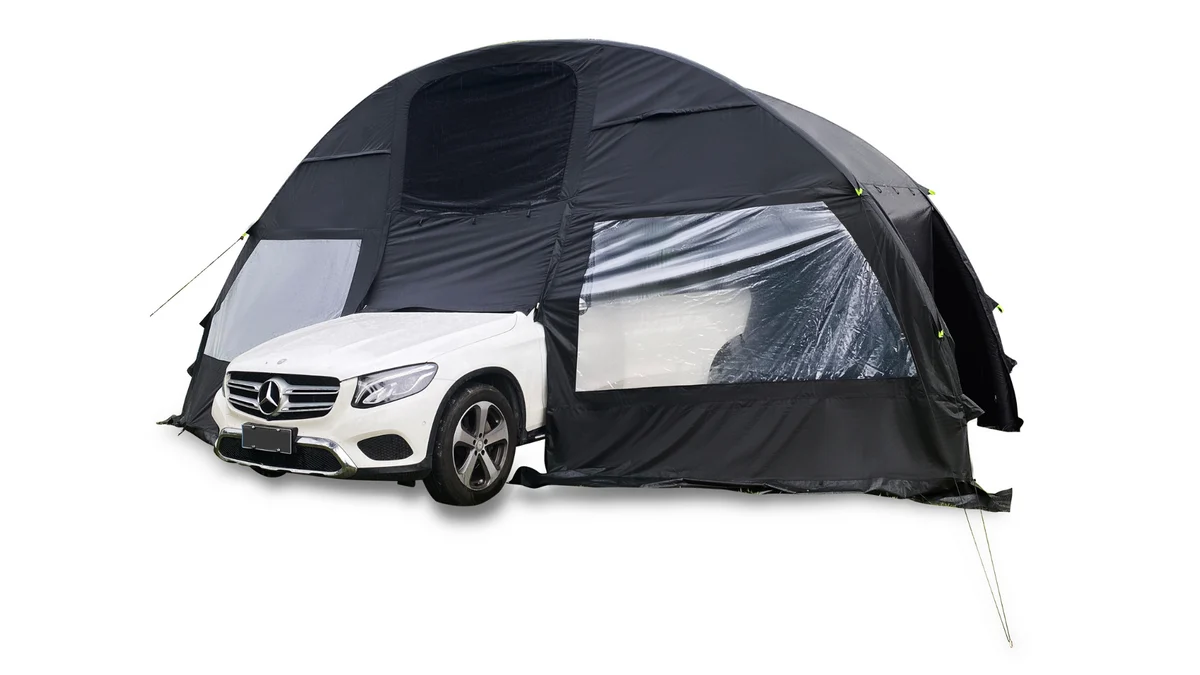
For many campers, the trip starts with a drive rather than a hike. When the vehicle carries the load, shelter priorities change. Floor space, weather protection, and quick setup often matter more than saving a few grams. A tent that connects to the car suits this style of travel, because it turns the area behind or beside the vehicle into usable living space. This guide covers what car campers should expect from a shelter, how it differs from gear built for the trail, and what to check before buying.
How Car Camping Changes What You Need From a Tent
Backpackers count every gram because everything rides on their shoulders. Car campers move gear from the trunk to the campsite, so they can choose a shelter for comfort instead of carry weight. The common needs are straightforward: a dry place to sleep, room to store gear, shade for cooking, and an easy path between the car and the tent.
A tent attached directly to the vehicle shortens that path. Luggage, seats, and sleeping space stay within one sheltered area, which helps during rain or wind. It also cuts down on the walking back and forth between car and campsite, a small convenience that adds up over a long weekend.
Temperature is the other pain point. A fabric shelter can feel stuffy in summer and cold in winter, so comfort features carry real weight in this category. Campers who travel in several seasons tend to look for materials and designs that handle changing conditions rather than a single mild-weather setup.
When an Ultralight Mountaineering Tent Is the Better Fit
A trip that leaves the vehicle behind calls for a different kind of shelter. On ridge camps and multi-day climbs, an ultralight mountaineering tent keeps the whole kit in one pack and the weight low enough for long days on foot. Pole geometry, fabric weight, and packed size all become more important than interior space.
The reverse is also true. A tent designed to sit beside a car is not meant for a summit pack, and carrying one up a trail would defeat its purpose. Many campers end up owning both types for this reason. The simple test is how the load travels. If the vehicle carries it, choose space and comfort. If your back carries it, choose weight. Matching the tent to the trip prevents both overpacking on the trail and underequipping at a drive-up campsite.
Smart Shell: A Tailgate Tent for Gas and Electric Vehicles
For drive-up trips, THECATAL’s Smart Shell is built as a tailgate tent that works with both electric and gasoline vehicles. Its connection point avoids the tailpipe, which is why it can pair with a wide range of vehicles, including SUVs, compacts, and vans. The tent can be set up in three ways: as a rear tent attached to the vehicle, as a side tent for cooking and relaxing, or as a standalone camping tent.
This flexibility suits changing campsites. At a roadside stop, the rear setup gives a sheltered sleeping area connected to the car. At a longer stay, the side setup can serve as a shaded space for meals while the vehicle stays free for day trips. When a campsite does not allow close parking, the standalone setup still works.
The interior measures 3.5 m × 2.5 m (11.5 ft × 8.2 ft), enough room to sleep, store gear, or sit comfortably during a long trip. The shell uses 70D silicone-coated ripstop nylon, and the full tent weighs 26 lb (12 kg). That is not ultralight, but it is easy to move from a trunk to a campsite, and the fabric is chosen for durability over minimal weight.
Weather, Temperature, and Setup Speed
Smart Shell is designed for year-round use, with waterproof, windproof, snow-resistant, and heat-resistant construction. For campers who face sudden rain or strong wind, a stable and well-protected setup matters more than any single feature. Checking the forecast and choosing a sheltered pitch still helps, since no tent removes the need for good campsite judgment.
One feature stands out in this category. The tent can connect to the vehicle’s air conditioning system, electric or gasoline, so campers can adjust the temperature inside instead of relying on ventilation alone. In hot weather that can make sleeping easier, and in cold weather it can take the edge off the night. How well it works will depend on the vehicle, the outside temperature, and how long the car runs, so campers should plan around those limits.
Setup takes about three minutes with no complex assembly. That matters on road trips with short stops, or when the weather turns while you are still unloading. A shelter that goes up quickly leaves more daylight for cooking, exploring, and settling in.
For groups that want more room, THECATAL’s Magic Fort sits in the same car camping range as a multi-room basecamp shelter with standing height and separate areas for sleeping and relaxing. It suits shared outdoor stays, where several people need space at once.
What to Check Before Buying a Car Camping Tent
Start with the vehicle. Check how the tent connects to your car, whether the connection suits your tailgate or door layout, and how much clearance the setup needs. Then consider the group. A tent that sleeps two comfortably may feel tight with gear for four, so interior size and storage space deserve as much attention as the headline weight.
Next, think about the seasons. A tent used only in summer has different needs from one that must handle cold nights or snow. Fabric, ventilation, and temperature control all play a part. After that, compare packed weight and packed size against your trunk space, since a shelter that does not fit with your other gear creates its own problems.
Care also affects how long a tent lasts. Dry it completely before storage, clean dirt off with mild soap, and pack it loosely instead of compressing it for months. These small habits protect coatings and seams over many trips.
Comparing Options and Sourcing Gear
Once the basics are clear, a side-by-side comparison makes the decision easier. Shoppers who want to review specifications for each tent can browse camping gear online and compare dimensions, fabrics, weights, and included accessories before committing. Working from complete specification pages is more reliable than relying on general marketing language, especially for a purchase that will be used across seasons.
THECATAL backs its tents with a two-year warranty. For a shelter meant to handle repeated setup, changing weather, and regular transport, that coverage is worth weighing alongside the product’s features. Whether the trip is a quick weekend drive or a long road journey, the right shelter is the one that matches how the gear travels and how many people will use it.
