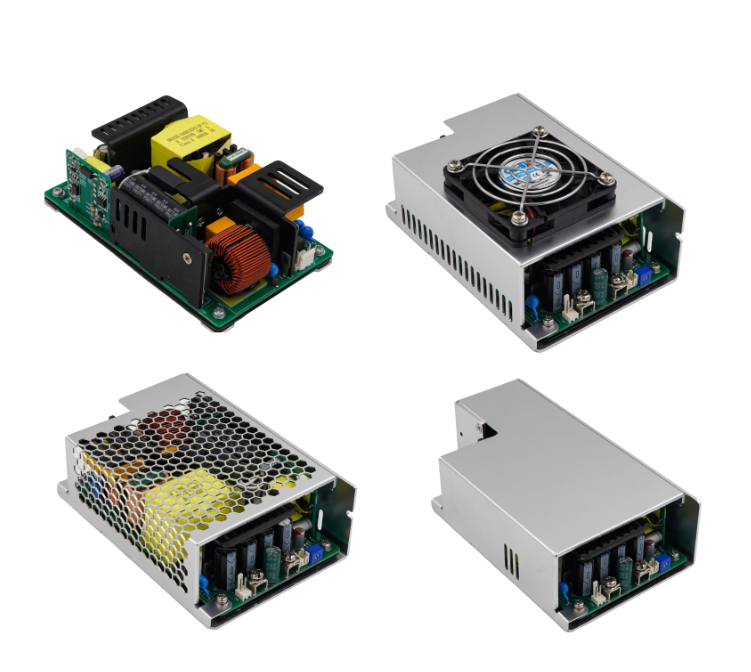
Medical equipment often contains multiple electronic modules within a limited enclosure. Controllers, displays, communication interfaces, sensors, processors, and monitoring circuits all require suitable power connections. As devices become smaller and more integrated, the power module also needs to fit the physical and electrical architecture of the system. A bare board power supply can be installed directly inside the equipment, giving engineers more flexibility when arranging internal components. For medical manufacturers, this approach can influence not only space utilization but also thermal design, EMC performance, safety, and production planning.
Internal Power Integration Starts With Equipment Layout
External adapters are useful when the equipment can accommodate a separate power unit, but many professional medical devices require the power conversion stage to remain inside the main enclosure. An internal board-level design allows engineers to consider the power module during the initial mechanical layout rather than adding it after the main structure has been completed.
This can be useful for monitoring equipment, laboratory instruments, diagnostic systems, and other products with limited internal space. Engineers can determine the position of the power module according to the location of control boards, connectors, ventilation openings, and other components.
The physical position also affects cable routing. Keeping power paths appropriately separated from sensitive signal circuits can help reduce unwanted interference. Mounting points, insulation barriers, connector accessibility, and service requirements should therefore be considered together during system architecture planning.
Board-Level Power Changes Thermal Design
A power module installed inside medical equipment shares the enclosure with other heat-generating components. Processors, displays, communication modules, and other circuits can already contribute to the internal temperature. Adding a power converter creates another thermal source that must be considered.
The cooling method should therefore be evaluated according to the actual equipment structure. Natural convection may be appropriate for some designs, while equipment with higher power density may require controlled airflow. Component placement can also affect the available heat path.
The UES500-SPAZ-OP series provides different cooling configurations, supporting up to 320W with convection cooling and up to 500W with user-provided forced-air cooling. These ratings demonstrate why power capacity needs to be considered together with installation conditions rather than viewed as a single fixed number.
EMC Depends on the Complete System
Medical equipment can contain sensitive analog circuits, sensors, communication interfaces, and digital processing components. Switching power circuits may generate high-frequency electrical noise, while external equipment can introduce disturbances into the power system.
An open frame switching power supply therefore needs to be evaluated as part of the complete medical device. Filtering, grounding, PCB layout, cable routing, switching behavior, and the distance between the power module and sensitive circuits can all affect system-level EMC performance.
Engineers should consider these factors during the layout stage. For example, placing a switching converter close to a sensitive signal path may create additional design challenges. Separating noisy power paths from low-level signal circuits and providing appropriate filtering can make later EMC verification more manageable.
The final equipment still needs to be evaluated according to the applicable EMC requirements. Component-level compliance does not automatically guarantee that the complete medical device will achieve the required system-level performance.
Electrical Safety Must Be Designed Into Integration
Medical applications require careful attention to electrical isolation and protection. When a power module is installed directly into the equipment, engineers need to consider insulation systems, creepage distances, clearance distances, grounding, accessible conductive parts, and the relationship between the power circuit and other internal electronics.
The UES500-SPAZ-OP series provides 2 MOPP isolation protection and specifies leakage current of ≤100μA. It supports an 80–264V AC input range and is designed for industrial, communication, and medical applications.
These specifications can provide useful references during system design, but the final safety evaluation must consider the complete equipment construction. The enclosure, wiring, connectors, protective earth arrangement, and other circuits can influence the final compliance result.
Why Open-Frame Construction Supports Flexible Integration
The main advantage of an open frame switching power supply is its integration flexibility. Because the power module does not rely on a conventional external enclosure, equipment manufacturers can incorporate it into their own housing and mechanical structure.
This can help designers optimize available internal space and determine the most appropriate mounting orientation. However, the flexibility also creates additional design responsibilities. The manufacturer must provide suitable protection against accidental contact and ensure that surrounding materials and components do not interfere with electrical or thermal performance.
For compact medical equipment, this means the power supply should be considered during enclosure development rather than selected after the mechanical structure has already been finalized.
What Should Engineers Verify Before Production?
A suitable power module should be evaluated under conditions that represent the final equipment. Engineers can begin with input voltage, output voltage, rated power, load variation, and startup behavior. They can then assess thermal performance, EMC behavior, insulation, protection functions, and mechanical integration.
Prototype testing is particularly valuable for internal power designs. A module may meet its individual specifications but produce different results after being installed inside a restricted enclosure. Temperature rise, airflow, cable routing, and nearby circuits can all change actual operating conditions.
Verification should also include abnormal conditions where applicable. Over-current, short-circuit, over-temperature, and input disturbances can be reviewed to understand how the power system responds when operating conditions move outside normal ranges.
Integration Also Affects Production Planning
System integration is not limited to the prototype stage. When medical equipment moves toward production, the power module must remain consistent across manufacturing batches. Mounting position, connector installation, cable routing, and insulation barriers should be clearly defined in production documentation.
A standardized internal design can make assembly and inspection easier. It can also reduce the risk of variations between early samples and later production units.
UE Electronic develops power solutions for medical, industrial, and communication applications. For equipment manufacturers, discussing mechanical, electrical, thermal, and compliance requirements before production can help establish a power configuration that is easier to integrate into the final product.
Choosing the Right Internal Power Architecture
A bare board power supply is important for medical system integration because the power module becomes part of the equipment’s overall electrical and mechanical architecture. Its position can influence heat dissipation, EMC behavior, wiring, insulation, and available internal space.
When selecting a solution, manufacturers should therefore evaluate more than output specifications. They should consider how the module will be mounted, how heat will leave the enclosure, how sensitive circuits will be protected from switching noise, and how the complete system will satisfy applicable safety requirements.
For medical equipment developers, early power integration can reduce the need for major layout changes later in the project. A well-matched bare board power supply can provide a practical foundation for compact equipment while allowing engineers to coordinate electrical safety, thermal management, EMC, and production requirements from the beginning.
