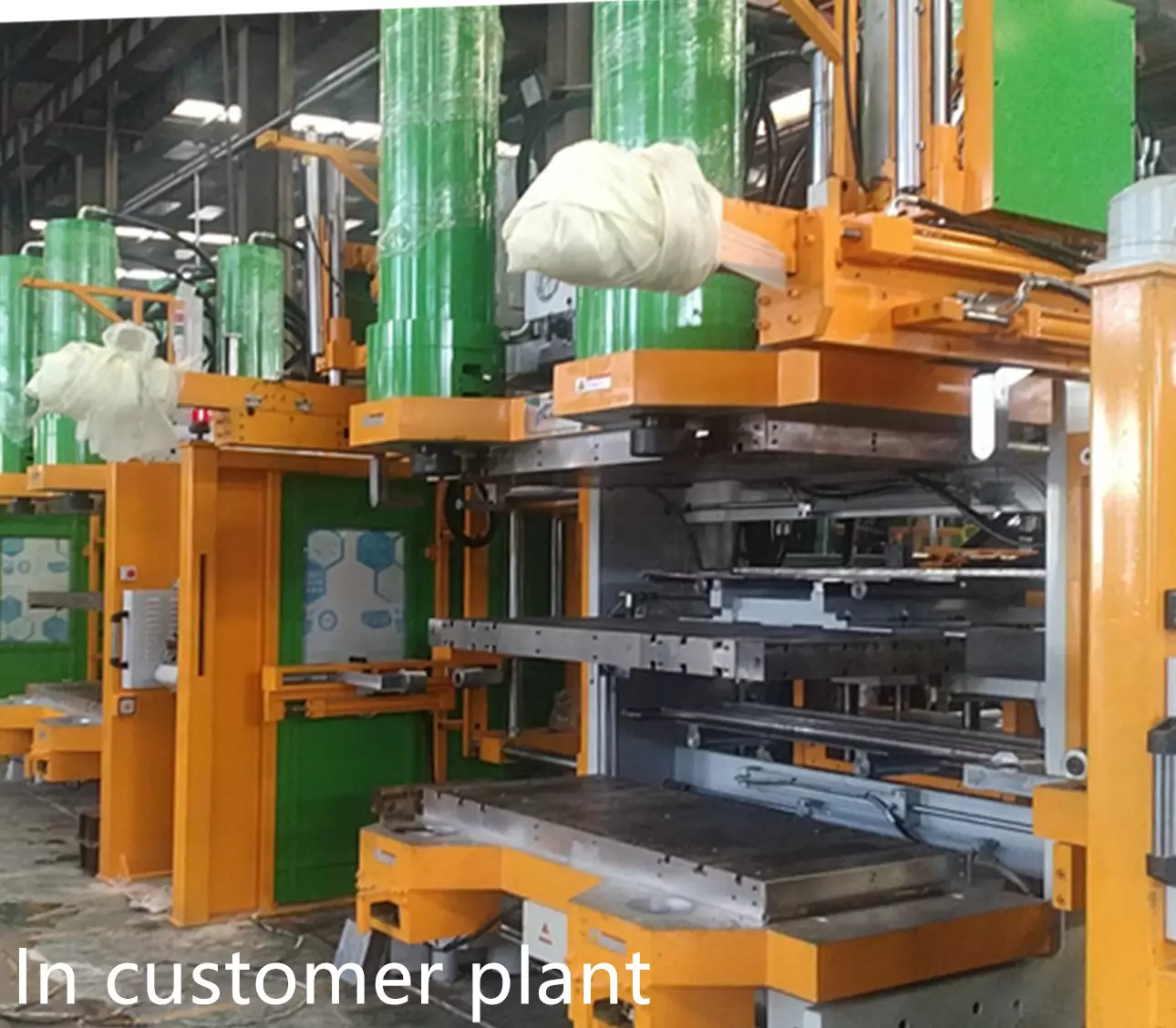
Energy use in rubber-track production is shaped by more than the rated power of a press. Heating, hydraulic pressure, mold movement, material handling, and idle periods all affect the energy consumed per finished track. For a B2B buyer, evaluating a rubber belt vulcanizing machine therefore requires attention to the complete production cycle rather than one isolated specification.
Chinese equipment producers increasingly approach efficiency as a systems issue. Automation can coordinate upstream preparation, vulcanization, and transfer so that presses spend less time waiting between cycles. That broader view also helps factories compare energy performance against output, product range, staffing requirements, and process stability instead of treating lower electricity use as the only target.
Match Press Capacity to the Actual Product Range
Oversizing can create avoidable operating costs when a large press repeatedly processes smaller tracks. A plant should begin with track width, track length, mold dimensions, and required clamping force, then select equipment with a working envelope close to those needs. This disciplined approach gives china rubber belt track vulcanizing press manufacturers a clearer basis for configuring a line.
The HYL range illustrates why model matching matters. Listed clamping forces extend from 1,000 to 9,000 kN, while maximum supported track width increases from 400 mm to as much as 914 mm. Supported track lengths also progress from 2,500-3,500 mm on the smaller model to 8,900-9,600 mm on the largest configuration.
Platen geometry must be reviewed at the same time. Top platen sizes span 950 x 600 mm to 2,250 x 1,050 mm, and mold-closing strokes range from 400 to 720 mm. Selecting by these physical requirements reduces the likelihood that a factory will operate excessive platen area or movement for products that do not need it.
Technical teams can also review a rubber track vs steel track vulcanizing press comparison to understand how track construction and application conditions influence mold size, clamping force, heating demand, and line configuration.
Procurement teams should compare capacity utilization across the expected order mix, including seasonal demand. A machine that appears efficient at full load may perform differently during frequent short-batch changeovers, while grouping similar large and small tracks can reduce mold changes and repeated warm-up losses. Production forecasts, mold families, future product sizes, realistic utilization rates, and seasonal scheduling therefore provide a stronger commercial basis for equipment selection and may improve efficiency before any hardware or control upgrade is considered.
Coordinate Hydraulics, Heating, and Automated Movement
Stable process settings reduce the energy lost through rejected parts and repeated curing. HWAYI lists a system pressure of 21 MPa across the six HYL models, giving engineers a consistent reference when reviewing pressure requirements and model scale. Uniform operating parameters are valuable when several presses share maintenance practices, training routines, or production reporting.
Hydraulic efficiency depends on when pressure and flow are required during a cycle. Mold closing, pressure build-up, curing, opening, and unloading do not place identical demands on the system. Modern control strategies can align hydraulic activity with each stage, while accurate sensors and maintained valves help prevent unnecessary pressure loss or prolonged movement.
Thermal management deserves equal attention because vulcanization holds the mold at controlled temperature for a defined period. Consistent platen heating supports even curing, whereas unstable temperature may extend cycles or create scrap. Insulation condition, heater zoning, warm-up scheduling, mold contact, and temperature calibration all influence the useful heat delivered to the rubber.
Automation links these functions into repeatable sequences. When loading and unloading occur on time, the press can avoid extended open periods and irregular cycle gaps. Reliable sequencing also makes energy-per-part data more meaningful because production conditions remain comparable across shifts, operators, and batches.
Metering at the machine or line level helps validate the effect of each change. Electricity data should be paired with cycle state and accepted output, otherwise a lower daily total may simply reflect reduced production. Comparable baselines keep improvement claims technically and commercially credible.
Build Efficiency Around the Entire Track Line
A complete HWAYI configuration can include an iron core winding machine, rubber-track preforming equipment, the vulcanizing press, and an automatic trail car. Integrating these stages allows material flow to be planned around press availability. The rubber belt vulcanizing machine then becomes one controlled station in a connected process rather than an isolated asset.
Line balance is especially important when multiple presses share transfer equipment. If preforming cannot supply molds on schedule, the presses may remain heated while waiting. If unloading is delayed, the following cycle starts late. Capacity calculations should therefore cover each upstream and downstream station, including buffers, trolley travel, mold preparation, and inspection time.
Useful efficiency indicators include kilowatt-hours per accepted track, idle energy per shift, warm-up energy, first-pass yield, average cycle time, and utilization. These measures connect utility cost with production results. They also help maintenance teams distinguish a process problem from normal variation in product size, compound, or curing schedule.
Maintenance planning reinforces the same objective. Worn seals, contaminated oil, damaged insulation, or poorly calibrated sensors can increase energy use gradually without stopping production. Trending utilities alongside equipment condition allows corrective work to be scheduled before inefficiency develops into quality loss or unplanned downtime.
For industrial buyers comparing china rubber belt track vulcanizing press manufacturers, the strongest proposal is one that connects machine sizing, stable controls, and line integration with measurable operating data. That balanced approach avoids exaggerated savings claims. It gives managers a practical method for improving energy performance while protecting throughput, curing consistency, and long-term equipment availability.
